Sunday, May 11, 2014

"I Was Just Reaching to Pick Up My Phone!"


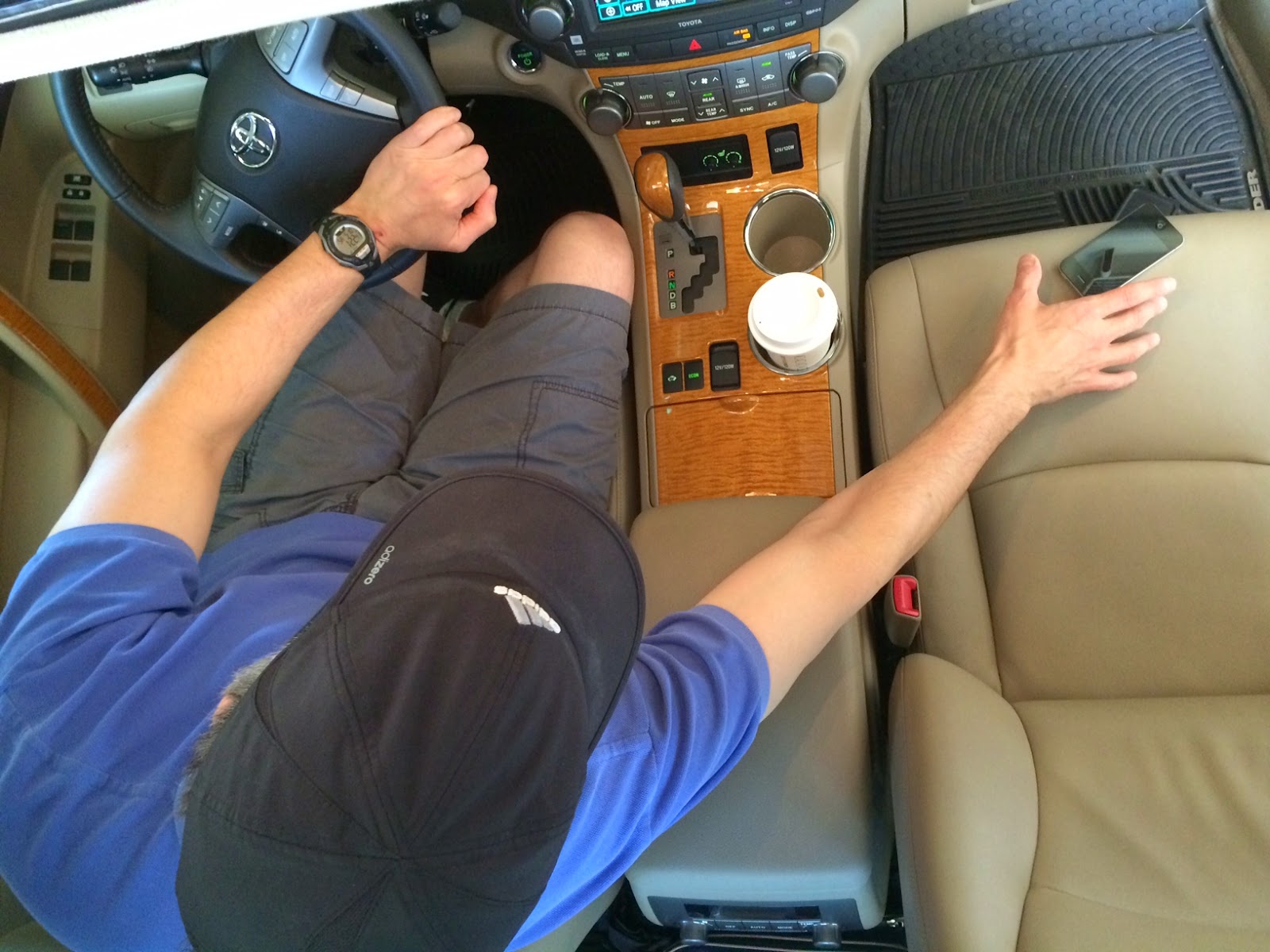
Why do so many negligent drivers give the excuse that they "were just reaching over to pick up their cell phone" after they have caused a tragic accident?  Do negligent drivers feel this is a more acceptable or less blame-worthy response to give the Police than I was sending a text message or trying to make a call?  Is this the way a guilty conscience forms the words so as to allow the person to feel they are at least taking partial responsibility for their bad behavior?  This week 21 year-old Chelsey Northrup was tragically killed when a negligent driver crossed the center-line while allegedly "reaching for his phone" on Parker Road near the intersection with Scio Church Road in Washtenaw County.  Additionally, this week a negligent driver allegedly "reaching for his phone" crossed the center-line on the dangerous M-14 and Barton Road exit in Ann Arbor and broadsided a car driven by a woman who was 33 weeks pregnant causing her to go into contractions.  These unnecessary tragedies should remind us all to put away our phones and seriously re-affirm the promises we make to ourselves and others to END distracted driving.    

Sunday, May 4, 2014

Dramatic Increase in Women Being Arrested for Drunk Driving


Federal Bureau of Investigation (F.B.I.) statistics show a twenty-one percent (21%) increase in Driving Under the Influence (DUI) arrests among women during the nine year period between 2003 and 2012.  Annual arrests among women increased from 174,000 to 650,000 nationwide.  Interestingly, annual arrest among men decreased by nearly 17 percent during this same time period (780,000 down to 650,000 nationwide).  Social science experts speculate that the increase in arrests of women may be due to more women being in the workforce so more miles are being driven by women and more driving occurs at night when they are more likely to be arrested for drunken driving.  Additionally, experts believe that it has become more socially acceptable than it used to be for women to drink in public, especially among young women.  Finally, many states have eliminated first offender diversion programs, so more women are being pushed into the criminal justice system without an ability to by-pass it.

The Michigan Office of Highway Safety Planning reports that in Michigan the number of drunk driving crashes have decreased for both men and women.  From 2003 to 2012 the number of drunk driving crashes for men decreased from 11,400 to 7,250.  During this same time period, drunk driving crashes for women decreased from 3,203 to 2,563 for women.  In 2012, 35 drunk driving crashes in Michigan were fatal for women and of these 68% involved young women between the ages of 21 to 34.  Substance abuse scientists report that women metabolize alcohol differently than men do and they do it in such a way that they're going to get more intoxicated at a faster rate.  If a 150 pound man and a 150 pound women have the same amount of alcohol, the women will be at a higher blood-alcohol content quicker.  With the legal driving limit for blood alcohol content dropping from 2003 to 2011 in many states, police are arresting more women for DUI's and as explained above there are many causative factors.  Perhaps more public service t.v., radio, and social media advertisements need to target young women warning them of their increased risks and encouraging them to use designated drivers.    

Sunday, April 27, 2014

Closing Michigan's Motorcycle Temporary Permit Loophole To Increase Motorcycle Safety

Last Tuesday both houses of the Michigan Legislature passed a law that limits the number of times motorcycle operators can obtain a Temporary Instruction Permit without completing the skills test required for the full motorcycle endorsement on their Michigan Drivers License.  The permit was designed to allow new motorcycle riders to take practice runs and gain the experience necessary to drive a motorcycle before taking the skills test.  The Temporary Instruction Permit requires the new operators to wear a helmet, ride only during the day, and ride with a fully endorsed adult motorcycle operator; however, many people would only obtain the Temporary Permit and keep renewing it to avoid having to take the skills test.  It has been difficult for Police to enforce the riding restrictions on the Temporary Permits and this has encouraged many people to repeatedly acquire the Temporary Permit rather than the full endorsement.  This new law is headed for the Governor's desk for his signature and will limit persons to 2 Temporary Permits over 10 years time. 

Legislators were moved to limit the number of Temporary Permits because crash data in Michigan has revealed that more than half of all motorcycle crashes in 2012 involved a motorcycle operator with a Temporary Permit or no permit / license at all.  Additionally, 44 percent of all crashes involved operators that did not have a full endorsement on their drivers license and were not wearing helmets.   Finally, more than half of the Michigan motorcycle riders killed in traffic accidents did not have the full license endorsements.  These shocking numbers reveal that the least experienced motorcycle operators are causing the largest share of the serious motorcycle accidents in Michigan. Hopefully, the closing of the endless Temporary Permits will reduce the injuries and deaths that have been occurring too frequently amongst these Temporary Permit operators.   

Saturday, April 19, 2014

Increased use of Party Buses - does the trend increase or decrease safety on Michigan Roads?


The start of N.H.L. playoffs, upcoming graduation parties, prom season, and the increased use of "party buses" across the nation reminds one of the tragic accident involving Red Wings' Vladimir Konstantinov in 1997.  Almost seventeen years ago, Konstantinov's limo driver blacked out, crossed three lanes of traffic, jumped a curb, and hit a tree at a high rate of speed.  Unbuckled in the back of the limo, Konstantinov, Sergei Mnatsakanov (Red Wings therapist), and Slava Fetisov (Red Wing Player) were all severely injured when they slammed into the interior of the limo as it was abruptly stopped by the stout tree.  The Red Wings were celebrating their Stanley Cup Championship and unfortunately got into a limousine driven by Richard Gnida whose license had been suspended at the time for drunk driving.  Konstantinov's promising career as an all-star defense-man abruptly ended and he is still severely debilitated with a traumatic brain injury.  Sergei Mnatsakonov is permanently paralyzed from the waist down.

Across the nation young people are choosing to use party buses rather than standard limousines to transport large groups to proms, bachelor / bachelorette parties, and bar-hopping events.  These party buses come equipped with wooden dance floors, neon lights, large screen televisions, leather couches, drink holders, killer sound systems and brass dance poles.  Fatalities and injuries have occurred when party bus passengers have gotten out of control and either fell out of the moving bus, stuck their heads out of an emergency roof hatches, or been slammed against the interior when an accident occurs.  The real debate is whether or not these party buses are increasing safety because the party bus keeps otherwise intoxicated drivers from driving themselves to these events or are these party buses discouraging use of seat belts with their enticing moving dance-party environments?

Unfortunately Federal Motor Carrier Safety Regulations and Michigan Laws have not kept pace with this new "party bus craze."  Michigan Law does not require a back seat passenger over the age of 16 to wear a seat-belt and there are no federal regulations or Michigan laws that require bus passengers to wear seat belts.  Hopefully, it will not take another tragic accident involving a beloved public figure like Vladi Konstantinov to motivate the Michigan Legislature to take a more active role in regulating the "party bus craze."              
Sunday, April 6, 2014

Guardian Appointments for Severely Injured Auto Accident Victims


Sadly, it is sometimes necessary to appoint a guardian for person that has been severely injured in an automobile accident in Michigan.  Oftentimes, a guardian is necessary because the adult victim has suffered a traumatic brain injury that has temporarily or permanently caused the victim to be incapable of making day-to-day decisions for them selves.  Michigan law defines an “incapacitated individual” one “who is impaired by reason of mental illness, mental deficiency, physical illness or disability, chronic use of drugs, chronic intoxication, or other cause, not including minority, to the extent of lacking sufficient understanding or capacity to make or communicate informed decisions.”   Mich. Compiled Laws 700.1105.   Other times, the appointment of a guardian is necessary because the car crash victim is less than 18 years old and needs an adult to stand-in-the-place of the minor in the eyes of the law.  When a negligent motorist causes the death of an auto accident victim, then the Probate Court will appoint a personal representative for the estate of the deceased victim.  Michigan Probate Courts appoint guardians and personal representative under the rules and procedures found in the Estates and Protected Individuals Code (EPIC); however, it is the Michigan Circuit Courts that conduct trials for establishing damage awards for the injured or deceased accident victims.   

It is important that the attorney you choose is experienced in both the Probate and Circuit Courts litigation.  An experienced lawyer can greatly assist grieving family members in choosing a guardian that will best represent all of the victim’s needs.  Additionally, in the case a wrongful death caused by a negligent driver, an experienced trial attorney can guide the family’s selection for a personal representative that will be the best trial witness to represent the deceased victim’s family in the lawsuit.

Sunday, March 23, 2014

Michigan Crosswalk Laws - State Rep. Adam Zemke Attempts to Build Consensus

State of Michigan Representative Adam Zemke is bringing the issue of conflicting local and state crosswalk laws to Lansing for discussion and debate.  Representative Zemke will hold multiple meetings across Michigan in an attempt to bring together pedestrian safety advocates and community leaders.  He also plans to meet with representative from the Michigan Department of Transportation and the Michigan State Police.  Hopefully, Representative Zemke can end the confusion and gain state-wide consensus as the best way to keep pedestrians safe in our state's crosswalks.  A clear and consistent law throughout the state would ease the mind of many drivers, pedestrians, and university student's parents throughout the state of Michigan. 

Saturday, March 8, 2014

Caution: Pothole Season in MIchigan Causing Serious Damages

The polar vortex brought us record cold and snow-fall accumulations during the winter of 2013-14.  Now the freeze and thaw cycle is ravaging our roads.  New potholes appear with each passing day of March.

The Michigan Department of Transportation (MDOT) is responsible for 10,000 miles of state highways.  Thus far MDOT has spent $72 million on total road maintenance through January 2014.  This compares to only $34 million for 2012 and $39 million in 2013 through January.  Additionally, MDOT has paid its staff 187 % more in overtime road maintenance this winter and had expended 85 % more for road salt this winter. 

The City of Ann Arbor's Administrator, Steve Powers, was quoted in the Ann Arbor News saying "We're really getting kicked in the teeth this year" when referring to the weather's toll on the city's streets.  The City of Ann Arbor has used 251 tons of asphalt cold patch this year in February 2014 to repair potholes. Last year the City only used 100 tons.  City residents have lodged 283 complaints requesting pothole repairs in February. This is more than six times the number of pothole complaints last year.

Retired Ann Arbor City Police officer, Rich Kinsey, suggests the following advice for dealing with potholes, avoiding damage to your car, and keeping the City's asphalt cold-patch crews safe:  (1).  drive more slowly than usual; (2). try to memorize the potholes on your daily drive; (3). be watchful for cold-patch crews walking behind their cold-patch dump trucks.

Caution is the watch-word this spring in Michigan to avoid serious injuries and death resulting from the loss of control of your automobile due to potholes or unexpected road-patch repair crews.